Candida and SIBO: SIFO, Fungal-Bacterial Interaction & Biofilms
On this page
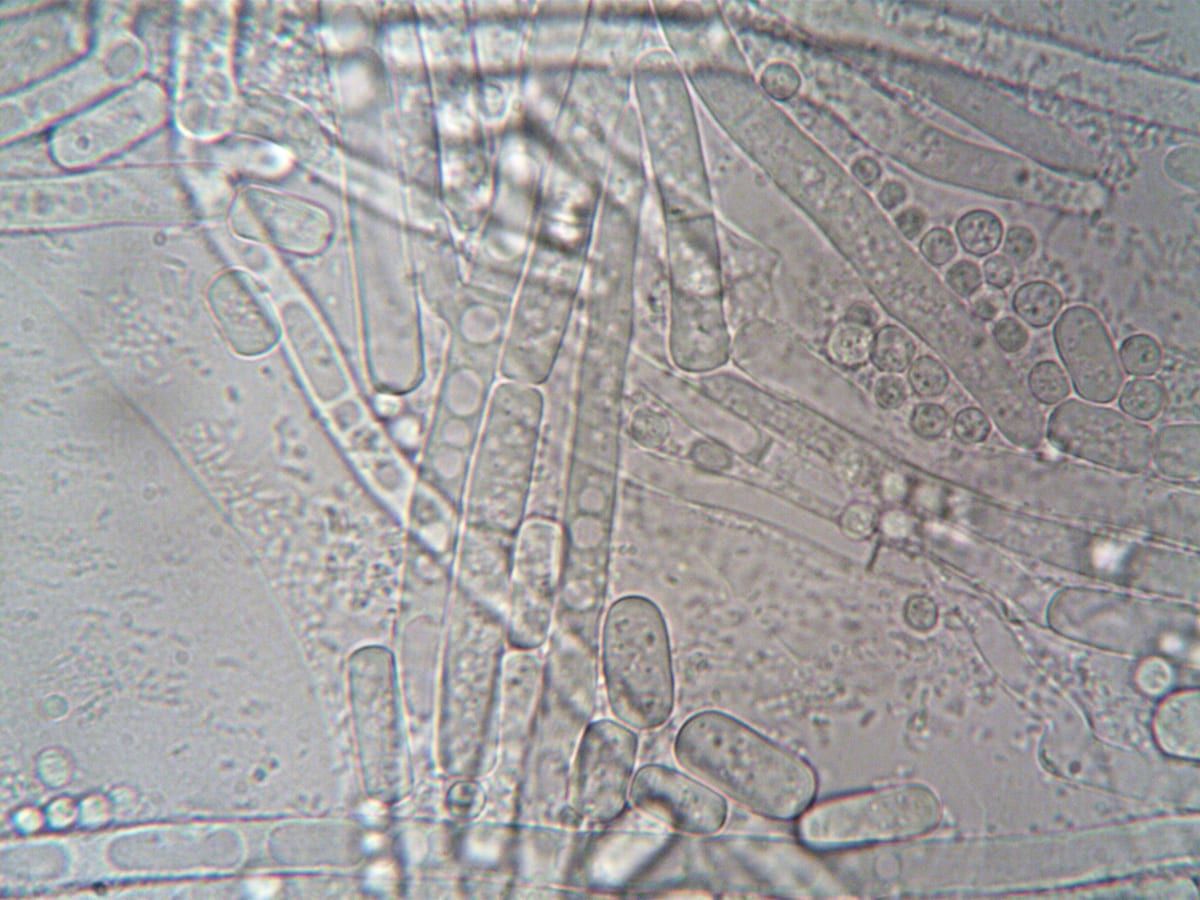
In short: small intestinal fungal overgrowthSmall intestinal fungal overgrowth (SIFO) An excess of fungi, most often Candida species, in the small intestine. Its symptoms resemble SIBO, but breath tests cannot detect it. (SIFO) is an overgrowth of fungi, usually Candida, in the small intestine. It has been studied far less than SIBO. In one study of 150 people with unexplained gut symptoms, more than a third had fungal overgrowth, alone or together with bacterial overgrowth2. SIFO can only be diagnosed by culturing fluid from the small intestine, and whether antifungal treatment relieves symptoms has not been tested in a controlled trial1. Candida in a stool sample is normal and does not mean overgrowth4.
This guide explains what SIFO is, how it relates to SIBO, how it is diagnosed and treated, and what the evidence does and does not show.
Candida in the healthy gut
Fungi are a normal part of the gut microbiome, though they make up only about 0.1% to 1% of the microbes in stool6:
- In a 2017 study of 317 stool samples from healthy volunteers, Candida albicans was found in 81% of samples. Baker’s yeast (Saccharomyces cerevisiae), mostly from food, was found in 97%4.
- A 2009 review estimated that yeasts, mainly Candida, are present in the gut of about 70% of healthy adults. It concluded that a link between gut yeast and IBS is plausible but unproven, and that removing gut yeasts is advisable only in clearly defined situations5.
Candida is a well-known cause of gut symptoms in people with weakened immunity and in those taking steroids or antibiotics1. SIFO is the idea that Candida can also overgrow in the small intestine of otherwise healthy people and cause gut symptoms.
SIFO and SIBO
The main study of SIFO took fluid samples from the duodenum of 150 people with unexplained gut symptoms and normal endoscopy and imaging2:
- 94 (63%) had some form of overgrowth: 38 had SIBO alone, 24 had SIFO alone and 32 had both. SIFO was due to Candida in every case.
- Slow gut movement (dysmotility) and the use of acid-suppressing medicines (proton pump inhibitorsProton pump inhibitor (PPI) A class of acid-reducing medication used for reflux, such as omeprazole. Long-term use lowers stomach acid and is associated with a higher risk of SIBO., PPIs) were independent risk factors for overgrowth.
- Symptoms were similar whether or not people had overgrowth, so symptoms cannot be used to diagnose it.
The most common symptoms reported with SIFO are belching, bloating, indigestion, nausea, diarrhea and gas1, the same as SIBO. A 2025 review estimates that up to 34% of people with SIBO may also have SIFO3.
Mixed biofilms
Fungi and bacteria can live together in biofilms, protected layers of microbes. In a 2014 laboratory study, Candida albicans biofilmsBiofilm A protective slime layer that microbial communities build around themselves. It can shield them from antimicrobial treatment. created a low-oxygen space that let two oxygen-sensitive gut bacteria grow, even in normal air7. A 2025 review notes that biofilms may help explain why some people relapse after SIBO or SIFO treatment, but that research on biofilms in the small intestine is still limited3.
How SIFO is diagnosed
| Test | Can it diagnose SIFO? |
|---|---|
| Small-intestinal fluid culture (endoscopy) | Yes; this is how SIFO was defined in studies2 |
| Hydrogen and methane breath test | No; it measures bacterial gases |
| Stool test for Candida | No; Candida is found in most healthy people's stool4 |
In the 2013 study, any growth of fungi in the duodenal fluid was counted as SIFO2. There is no agreed threshold yet, and the clinical meaning of fungal overgrowth, both in healthy people and in people with symptoms, still needs to be confirmed1. In practice, SIFO is often suspected rather than proven, for example when SIBO treatment fails. See our guides to endoscopy and stool tests.
Treatment
A 2015 review recommends a 2 to 3 week course of antifungal medicine, which may improve symptoms, but notes that evidence for eradication is lacking1. The main options are3:
- Fluconazole, an azole antifungal that is absorbed into the body.
- Nystatin, a polyene antifungal that stays mostly in the gut.
Most of what is published on treatment comes from case reports. In one, a woman with severe diarrhea and 18 kg of weight loss had Candida tropicalis overgrowth in her small intestine. Her symptoms resolved after 3 weeks of fluconazole together with nutritional support8. In rare, severe cases in people with weakened immunity, fungal overgrowth has even caused bowel obstruction9.
Fluconazole safety. The fluconazole label warns of rare serious liver injury and of heart-rhythm problems (QT prolongation). It must not be combined with certain drugs that affect heart rhythm, including erythromycin10, which is also used as a prokinetic after SIBO treatment. Tell your doctor about all medicines you take.
Other approaches. The probiotic yeast Saccharomyces boulardii reduces Candida’s ability to stick to the gut lining and form biofilms in laboratory studies3. Oregano oil acts against Candida in the laboratory. “Candida diets” that cut out sugar and yeast are popular, but we found no controlled trials of them for SIFO.
Die-off. SIBO practitioners report that symptoms during the first days of treatment (“die-off”) tend to be more intense with yeast than with bacteria11. This has not been studied.
Common questions
Does SIBO cause candida overgrowth?
They share risk factors such as slow gut movement and PPIs, and they often occur together: a third of the people with overgrowth in the 2013 study had both2. Whether one causes the other is not known.
Can a stool test show candida overgrowth?
No. Candida is found in the stool of most healthy people4, and stool reflects the colon rather than the small intestine.
Should I take antifungals if SIBO treatment did not work?
Talk to your doctor. Other reasons for treatment failure, such as an unaddressed root cause, a wrong diagnosis or methane overgrowth, are better established. If SIFO is suspected, a small-intestinal fluid culture is the only way to confirm it1.
Works Cited & Scientific References
11
▼
- Small intestinal fungal overgrowth - Curr Gastroenterol Rep 2015 (PubMed)
- Dysmotility and proton pump inhibitor use are independent risk factors for small intestinal bacterial and/or fungal overgrowth - Aliment Pharmacol Ther 2013 (PMC)
- Small intestinal bacterial and fungal overgrowth: health implications and management perspectives - Nutrients 2025 (PMC)
- The gut mycobiome of the Human Microbiome Project healthy cohort - Microbiome 2017 (PMC)
- Yeasts in the gut: from commensals to infectious agents - Dtsch Arztebl Int 2009 (PMC)
- Candida spp. in human intestinal health and disease: more than a gut feeling - Mycopathologia 2023 (PMC)
- Anaerobic bacteria grow within Candida albicans biofilms and induce biofilm formation in suspension cultures - Curr Biol 2014 (PMC)
- A wasting syndrome and malnutrition caused by small intestine fungal overgrowth: case report and review of the literature - Integr Med 2017 (PMC)
- Small intestinal fungal overgrowth mimicking a surgical abdomen and presenting as bowel obstruction: a case report and literature review - Cureus 2026 (PMC)
- Fluconazole tablets prescribing information - DailyMed, US National Library of Medicine
- SIBO die-off symptoms: how long it lasts and what helps - SIBOinfo
Topics & Tags: