Sauerkraut and SIBO: Fermented Cabbage, Histamine & Lactic Acid
On this page
In short: no study has tested sauerkraut in people with SIBO. In a small 2018 trial in people with IBS, 75 g of sauerkraut a day for 6 weeks improved symptoms, and pasteurized sauerkraut worked about as well as raw1. The possible downsides for people with SIBO are the fermentable cabbage fibers, histamine and other amines that build up during fermentation, and D-lactate. A cautious approach is to avoid it during treatment and reintroduce it slowly afterwards.
This guide covers what is in sauerkraut, what the research shows, and how to decide whether to eat it with SIBO. For fermented dairy, see our kefir guide.
What is in sauerkraut?
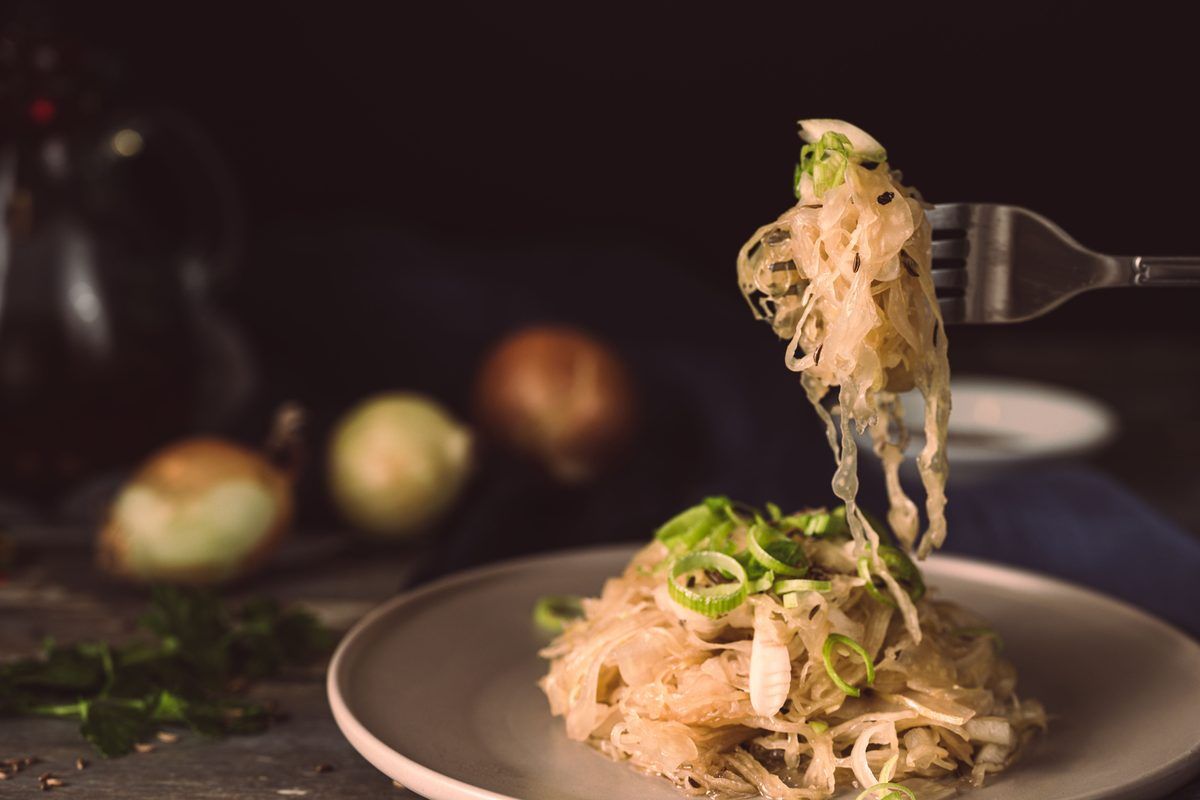
Sauerkraut is shredded cabbage fermented with 2% to 3% salt. The fermentation happens naturally, driven mainly by lactic acid bacteria such as Leuconostoc, Lactobacillus (including L. plantarum and L. brevis) and Pediococcus. The lactic acid they make lowers the pH and preserves the cabbage2. Raw sauerkraut contains these live bacteria; pasteurization kills them.
The bacteria in sauerkraut vary a lot between batches and brands. A 2025 analysis of commercial sauerkraut found a wide range of bacteria and quality measures between samples6.
What the research shows
| Study | Who | Finding |
|---|---|---|
| 2018 randomized trial, Norway | 34 people with IBS | Raw and pasteurized sauerkraut both improved IBS symptom scores, with no significant difference between them1 |
| 2021 randomized study, US | 36 healthy adults | A diet high in fermented foods increased gut microbial diversity and lowered inflammatory markers3 |
In the IBS trial, sauerkraut bacteria (L. plantarum and L. brevis) were found in stool more often in the raw sauerkraut group. Because pasteurized sauerkraut helped too, the authors suggest that the benefit came more from the cabbage fibers than from the live bacteria. The study was small and had no group without sauerkraut1. A 2019 review concluded that there is not yet enough evidence to judge the effect of fermented foods on gut health and disease2.
None of these studies tested people with SIBO. Probiotic supplements, which have been studied in SIBO, can help clear it but have not been shown to prevent it7; see our probiotics guide.
Possible downsides with SIBO
Fermentable fibers
Cabbage contains carbohydrates that gut bacteria ferment. SIBO diets reduce fermentable carbohydrates because bacteria turn them into the gases that cause symptoms8. How well a person tolerates sauerkraut varies; check a FODMAPFODMAPs Fermentable oligo-, di- and monosaccharides and polyols: short-chain carbohydrates that are poorly absorbed and quickly fermented by gut microbes. guide for serving sizes and see our low-FODMAP guide.
Histamine and other amines
Lactic acid bacteria in fermented vegetables can produce histamine5. Fermentation also produces other “biogenic amines”. In the 2025 analysis, putrescine and cadaverine were the main amines in sauerkraut, and four sauerkraut samples exceeded an estimated upper limit for total amines6.
People with histamine intolerance, a condition in which histamine from food is broken down poorly in the gut, may react with headaches or gut or skin symptoms. Fermented cabbage is among the foods excluded on low-histamine diets. The condition is still poorly defined, and more research is needed on how to diagnose and manage it5.
D-lactate
Leuconostoc, the main bacterium in sauerkraut, makes D-lactate, a form of lactic acid that can cause metabolic stress when too much is taken in4. In a 2018 study, 30 people with brain fog, gas and bloating, all of whom took probiotics, had SIBO and D-lactic acidosis more often than people without brain fog. Brain fog resolved in 77% after they stopped probiotics and took antibiotics9. That study was about probiotic supplements, not sauerkraut, but it is one reason some practitioners are cautious about large amounts of lactic acid bacteria in people with SIBO.
Should you eat sauerkraut with SIBO?
There is no evidence-based answer yet. A reasonable approach:
- During treatment, consider avoiding sauerkraut, along with other fermentable foods, to keep symptoms down. SIBO practitioners use diets during treatment mainly to reduce symptoms, not to clear the overgrowth8.
- After treatment, reintroduce it slowly, starting with a teaspoon or two and increasing over days if you tolerate it. The IBS trial used 75 g a day1.
- If you react to histamine-rich foods such as aged cheese, wine and cured meats, sauerkraut may cause similar symptoms5.
- Raw vs. pasteurized: raw sauerkraut contains live bacteria; pasteurized does not. In the IBS trial both helped similarly1, so if live bacteria are a concern, pasteurized sauerkraut is an option.
See our guides to the SIBO diet and eating after SIBO treatment.
Common questions
Is sauerkraut a probiotic?
Raw sauerkraut contains live lactic acid bacteria, but the types and amounts vary between batches and have not been standardized like a probiotic supplement26.
Can sauerkraut cause SIBO?
There is no evidence that it does. Most SIBO is caused by problems such as slow gut movement or low stomach acid; see our causes guide.
Why do I feel worse after eating sauerkraut?
Possible reasons include fermentation of cabbage fibers by bacteria in the small intestine, or a reaction to histamine or other amines58. Try a smaller portion, or wait until after treatment.
Works Cited & Scientific References
9
▼
- Lacto-fermented sauerkraut improves symptoms in IBS patients independent of product pasteurisation: a pilot study - Food Funct 2018 (PubMed)
- Fermented foods: definitions and characteristics, impact on the gut microbiota and effects on gastrointestinal health and disease - Nutrients 2019 (PMC)
- Gut-microbiota-targeted diets modulate human immune status - Cell 2021 (PMC)
- Reduction of D-lactate content in sauerkraut using starter cultures of recombinant Leuconostoc mesenteroides expressing the ldhL gene - J Biosci Bioeng 2016 (PubMed)
- Histamine intolerance: the current state of the art - Biomolecules 2020 (PMC)
- Microbiota and quality indexes of commercial sauerkraut and fermented cucumbers - Environ Microbiol Rep 2025 (PMC)
- Probiotics for preventing and treating small intestinal bacterial overgrowth: a meta-analysis and systematic review of current evidence - J Clin Gastroenterol 2017 (PubMed)
- SIBO diet - SIBOinfo
- Brain fogginess, gas and bloating: a link between SIBO, probiotics and metabolic acidosis - Clin Transl Gastroenterol 2018 (PMC)
Topics & Tags: